
Susan Brewer is an American artist best known as Peter Fonda’s first wife and the mother of Bridget and Justin Fonda. While her marriage connected her to one of Hollywood’s most celebrated families, she chose to live a private life away from fame and media attention. She married Peter Fonda before he became a cultural icon, supported their family during the early years of his career, and focused on raising their children rather than pursuing the spotlight herself. Today, Susan Brewer is remembered not for celebrity status but for her quiet role in the early history of the famous Fonda family.
Quick Bio
| Detail | Information |
|---|---|
| Full name | Susan Jane Brewer |
| Nationality | American |
| Known for | Peter Fonda’s first wife and Bridget Fonda’s mother |
| Education | Attended Sarah Lawrence College |
| Profession | Artist; brief uncredited film appearance |
| Former husband | Peter Fonda |
| Marriage | October 8, 1961, at St. Bartholomew’s Church in New York |
| Divorce | Finalized in 1974 |
| Children | Bridget Fonda and Justin Fonda |
| Film appearance | Easy Rider (1969), as a woman in the commune |
| Public life | Lives outside the celebrity spotlight |
Susan Brewer Before the Famous Fonda Family Name
Before Hollywood placed a famous last name beside hers, Susan Brewer was a student with her own direction. In 1961, news photographs described her as a 20-year-old from Beverly Hills, California. She was attending Sarah Lawrence College in Bronxville, New York and living near New York City during a lively creative period.
Her family had links to a powerful business world as well. Her mother, Mary Sweet, married Noah Dietrich, a businessman best remembered for his long professional connection to Howard Hughes. Yet Susan Brewer did not turn that family link into a public identity. Her own story became connected to the arts instead.
She was also close to New York’s theatre world, where Peter Fonda was making his way onstage. Their paths met before he became the leather-jacketed face of a new Hollywood. She knew the young actor before the image, the awards, and the legend.
A Young Love Story at the Start of Peter’s Career
The couple married in New York in 1961
Peter Fonda was 21 when he married Susan Brewer on October 8, 1961. The ceremony took place at St. Bartholomew’s Church in Manhattan. A photograph from that day shows the newly married pair sitting close together in a car. Peter is smiling and giving the camera a playful wink. Susan sits beside him, calm and composed.
The timing made the wedding feel like the opening of two stories at once. Peter had just begun appearing in the Broadway play Blood, Sweat and Stanley Poole. On the marriage record, he gave his work simply as “actor.” He had the Fonda name, but he was still trying to prove himself.
Susan entered the marriage before Peter’s first major films. She was marrying a young stage actor whose future was still taking shape, not an established counterculture hero. Their relationship began before the world decided what Peter Fonda would represent.
Becoming part of a Hollywood dynasty
Marriage brought Susan into a family that already carried great weight in film. Peter’s father, Henry Fonda, was one of America’s most respected actors. Peter’s older sister, Jane Fonda, was also building her own screen career. Family gatherings could never be fully separated from acting, scripts, reviews, and public attention.
Still, she did not try to compete with that fame. Public records and family accounts present her mainly as an artist, a wife, and later a mother. A famous family is often remembered through its biggest names. Yet homes are also shaped by people who never receive a headline.
Building a Home While Hollywood Moved Faster
Peter’s screen career began to grow soon after the wedding. He appeared in Tammy and the Doctor and The Victors in 1963. By the middle of the decade, he had moved away from the polished image expected of Henry Fonda’s son. He became linked to motorcycles, long hair, new ideas, and the counterculture.
Susan Brewer was building family life during those same years. Their daughter, Bridget Jane Fonda, was born in Los Angeles on January 27, 1964. Their son, Justin Fonda, followed in 1966. Two young children were now growing up around a father whose public life was expanding quickly.
A home with imagination and clear rules
Bridget later gave a warm picture of that childhood. She remembered adults who were playful, creative, and spontaneous. Her godparents, actor Larry Hagman and his wife Maj, held funny parades on the beach. Peter chased his daughter around a tennis court on roller skates. The home did not feel dull or stiff.
But there was order too. Bridget said she used respectful names for adults, washed her hands before eating, and used a napkin. She described her mother as a traditional homemaker. These memories show the balance Susan Brewer helped create. The children could enjoy the free spirit of the 1960s without growing up without limits.
Peter’s public image became wild and rebellious. At home, however, there were meals, manners, school, and children who needed steady care. Susan’s role belonged to that quieter world. It was less visible, but it mattered every day.
Susan Brewer and the Family Moment in Easy Rider
In 1969, Easy Rider changed Peter Fonda’s career and helped change American film. Peter produced the movie, co-wrote it, and played Wyatt, the quiet rider in the American flag jacket. Dennis Hopper directed and played Billy. Jack Nicholson’s supporting role also helped make the film unforgettable.
Susan Brewer had a tiny place in that landmark movie. She appears without a screen credit as a woman in the commune. Bridget and Justin also appear as children in the same scenes. Their parts were small, but the moment placed the young family inside the film that would define Peter’s public life.
The appearance was not the start of a large acting career. Its value is more personal. For a few moments, the line between Peter’s work and his home disappeared. His wife and children became part of the strange, hopeful world his film placed on screen.
Years later, viewers could watch those scenes knowing that the little girl would become Bridget Fonda. Susan remained the least public member of the group. One movie held a future star, a future behind-the-camera worker, a rising icon, and a mother who preferred life away from the center.
When Marriage and Family Life Began to Change
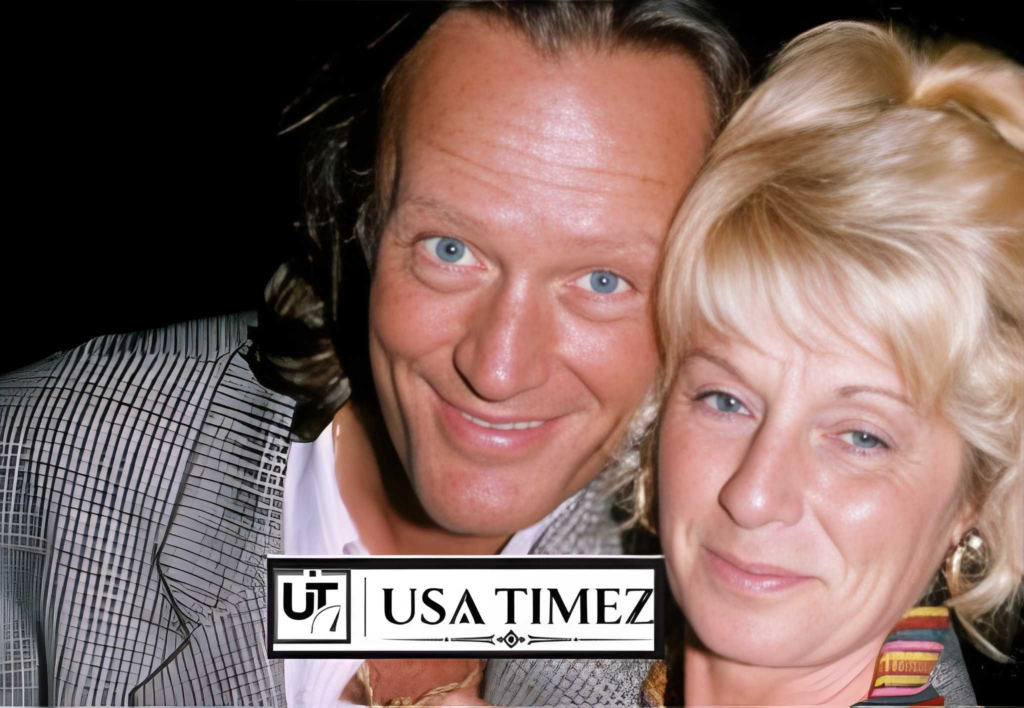
The success of Easy Rider made Peter an international symbol. More films, travel, creative plans, and attention followed. The man Susan had married as a young Broadway actor now carried a public image larger than their private world.
It would be easy to invent a neat reason for the marriage ending. Real relationships are rarely that simple. What is clear is that the couple separated in the early 1970s, and their divorce became final in 1974. Their marriage had lasted about thirteen years, covering Peter’s full journey from hopeful stage actor to major film figure.
The change affected more than two adults. Bridget and Justin were still children. Family accounts say the children went to live with their mother after the split. Peter later sought custody of Justin, while Bridget continued seeing her father during school breaks. Her later memories held both affection and hurt, which is often true when a family changes shape.
Susan became the steady parent in the first period after the separation. That chapter involved helping two children live through a broken home while the world watched their father as a symbol of freedom. The legal divorce ended the marriage, but Susan and Peter remained connected through Bridget and Justin. Peter married Portia Rebecca Crockett in 1975, and she also became an important parent figure.
Bridget’s later interviews show that her bond with Peter survived the hard parts. She visited him, shared holidays with him, and spoke about the playful father she remembered. As an adult, she said they got along well. Family relationships can heal even when they do not return to their old form.
For Susan, motherhood continued after the divorce. So did her own identity as an artist. She did not use the breakup to begin a public media fight. Her silence kept private family moments from becoming entertainment. In a famous family, privacy can be a strong boundary.
Susan Brewer as Bridget Fonda’s Mother
Bridget grew up with the weight of three famous names around her: her father Peter, her grandfather Henry, and her aunt Jane. She first appeared in Easy Rider as a small child, but her real acting path began years later. A school play awakened her interest, and she went on to study acting at New York University.
By the late 1980s and 1990s, Bridget had built a career that was clearly her own. She appeared in Scandal, The Godfather Part III, Single White Female, Singles, Point of No Return, Jackie Brown, and A Simple Plan. Her work brought Golden Globe and Emmy recognition, along with leading roles in several popular films.
Susan watched her daughter enter the very world she had kept at a distance. She was an artist and had once appeared briefly in a major movie. Bridget took that creative thread much farther, but she also kept a strong sense of limits around fame.
In 2002, Bridget stepped away from acting. She later married composer Danny Elfman and focused on family life. Her choice was personal, not a copy of her mother’s path. Still, both women showed that leaving the spotlight can be an active choice, not a defeat. A person can value art without giving the public every part of life.
Susan’s influence is easiest to see in the childhood Bridget described. There was imagination, but there were also rules. There was a famous name, but daily life still mattered.
Justin Fonda Chose Life Behind the Camera
Justin Fonda took a quieter route than his sister. Like Bridget and his mother, he appeared as an uncredited member of the commune in Easy Rider. He was only a small child, and the appearance remained a family moment rather than the launch of a child-star career.
As an adult, Justin worked mainly behind the camera, including work as a cinematographer. He also had an acting part in the 2000 film Big Eden. His path kept him connected to visual storytelling without placing him under the same level of attention his father and sister received.
The two children carried the family’s creative life in different ways. Bridget became a well-known actor. Justin worked more quietly within film. Their mother stood at the start of both stories. She helped connect Henry Fonda’s classic Hollywood world to Bridget and Justin’s later work.
A Private Life After a Very Public Chapter
After the divorce, Susan did not seek a second life as a celebrity. She kept her personal relationships and later years outside regular entertainment coverage. Her public profile remains separate from cameras and celebrity news.
That privacy is one of the story’s clearest themes. Susan Brewer had seen fame from very close range. Her later choices kept the public at a respectful distance.
Peter continued acting for decades and received some of his strongest praise for Ulee’s Gold in 1997. He died in 2019. Bridget had already retired from acting. Justin remained less visible. Over time, the whole family story became quieter, though interest in the Fonda name never fully went away.
Her life reminds readers to separate a private person from the fame around her. The useful facts tell a human story: she studied, married young, raised children, appeared briefly in a landmark film, faced divorce, and chose privacy afterward.
Public Image and the Quiet Legacy of Susan Brewer
Susan Brewer is often introduced as Peter Fonda’s first wife. That description is true, but it is only the doorway. She knew him before his film career began, built a home during his rise, and raised the two children who carried the next branch of the Fonda story.
Her public image was never shaped by loud self-promotion. A wedding photograph, a brief film appearance, and her daughter’s childhood memories show a young student, a mother, an artist, and a woman who valued life beyond public approval.
Her legacy also lives in contrast. Peter became a symbol of rebellion. Bridget became a leading actress and later chose family life. Justin stayed closer to the working side of film. Susan Brewer remained near all three stories while keeping her own life largely private.
Fame records the person standing in the brightest light. Family history also remembers the person who kept life moving when the cameras were gone. Susan’s story belongs to that second kind of legacy—quiet and deeply tied to the people she raised.
Conclusion
Susan Brewer lived beside a major chapter of American movie history, but she never allowed that chapter to tell her whole story. She married Peter Fonda before he was famous, became part of a respected acting family, and raised Bridget and Justin during years of great change.
There were bright moments, including the family’s small appearance in Easy Rider. There were painful changes too, especially the end of a thirteen-year marriage. Through it all, Susan chose a path that valued family, art, and privacy more than constant attention.
That is why her story still feels meaningful. It shows that a quiet life can sit beside a famous one without becoming smaller. Susan Brewer may stand outside Hollywood’s brightest frame, but her place in the Fonda family story is lasting.
FAQs About Susan Brewer
Who is Susan Brewer?
Susan Brewer is an American artist. She is best known as Peter Fonda’s first wife and the mother of Bridget and Justin Fonda.
When did Susan Brewer marry Peter Fonda?
She married Peter Fonda on October 8, 1961, at St. Bartholomew’s Church in New York City.
How many children does Susan Brewer have?
She has two children with Peter Fonda: actress Bridget Fonda and filmmaker Justin Fonda.
Was Susan Brewer in Easy Rider?
Yes. She appeared without screen credit as a woman in the commune. Bridget and Justin also appeared in the commune scenes.
What is Susan Brewer doing now?
She keeps her present life private and stays outside the celebrity spotlight.